Ecological Significance
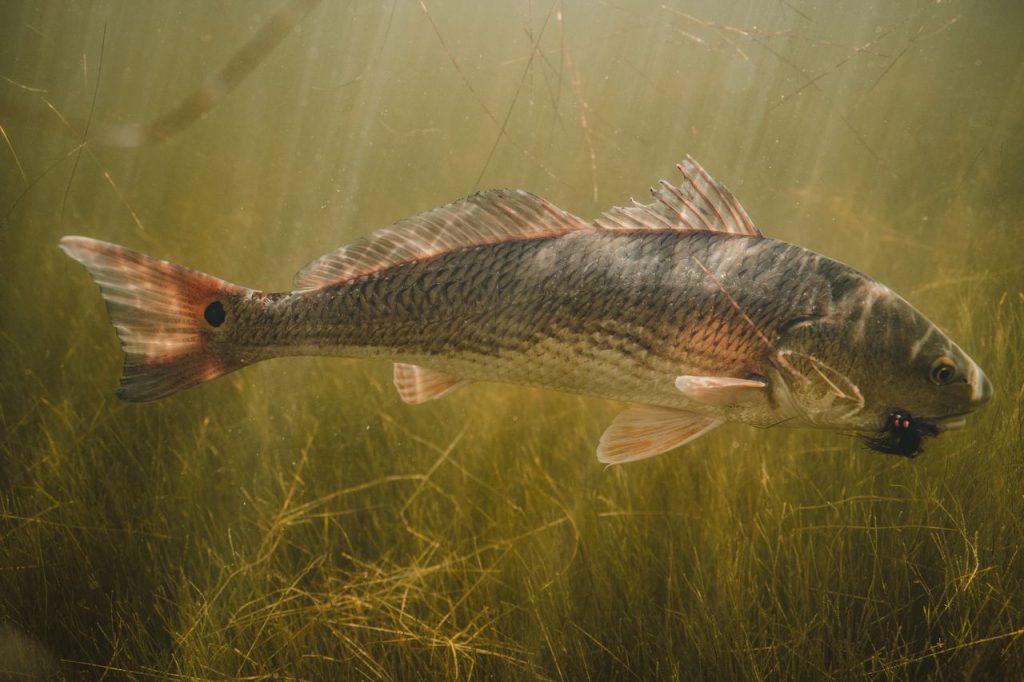
These species cover the range of this tutorial. Red Drum and Atlantic Croaker are both Sciaenidae, and share the same estuarine habitat. Southern Flounder lives in the same shallow waters but belongs to a different order. Bull Shark is a cartilaginous fish that diverged from all bony fish over 420 million years ago,10 making it a great choice as an outgroup.
Closely related species share habitat, spawning timing, and stress responses. A policy that protects estuary habitat for one Sciaenidae species can benefit the whole clade. Knowing who is to who makes conservation more targeted.
Why would a habitat protection policy for one Sciaenidae species likely benefit the others?
Related species share habitat requirments. Red Drum, Black Drum, Speckled Trout, and Atlantic Croaker all depend on seagrass beds and marsh edges at some life stage. Protect the habitat for one and you protect it for all of them.
Conservation Applications
Look-alikes from different families: Black Drum and Sheepshead
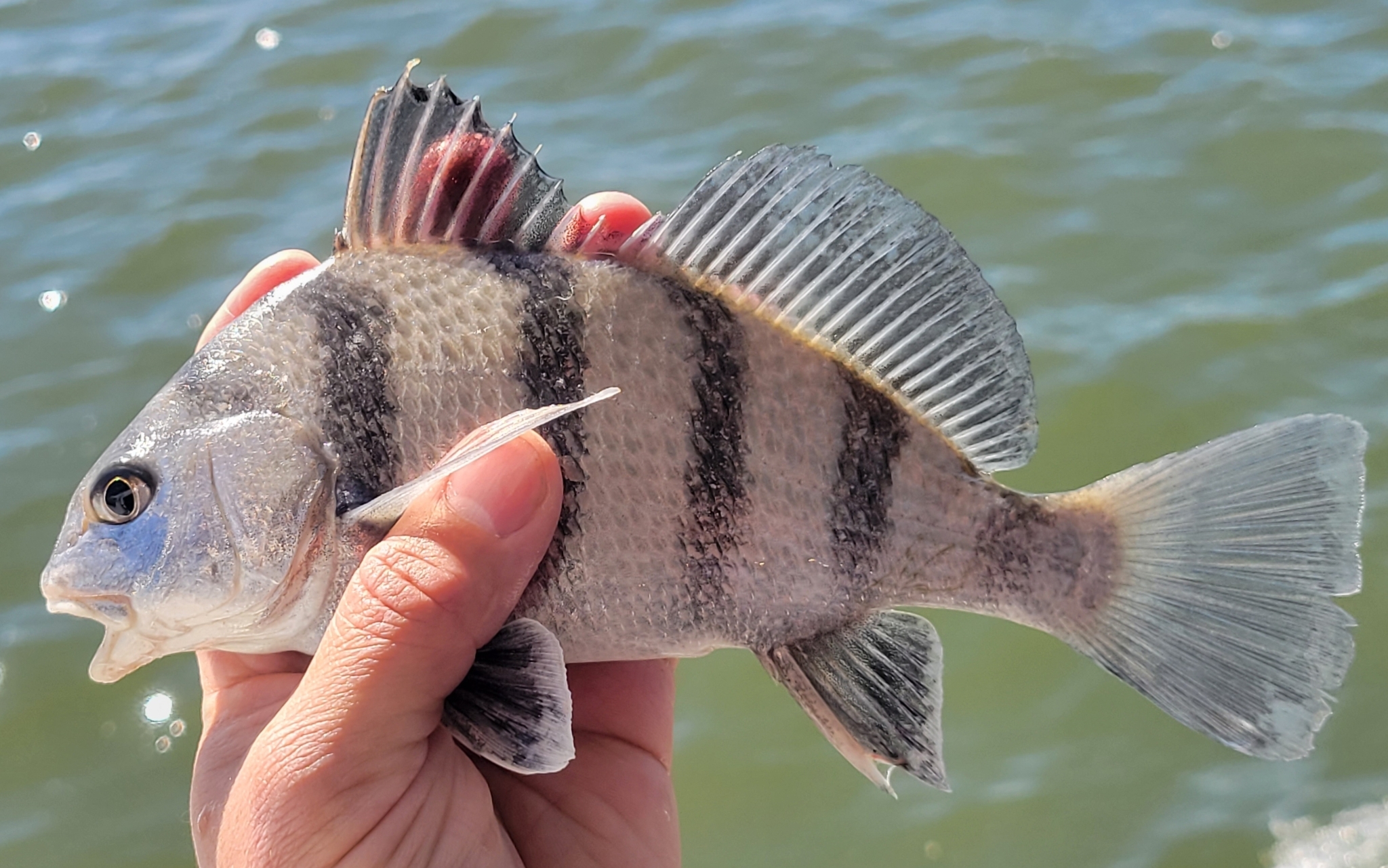
Juvenile Black Drum and Sheepshead look really similar. They both have black vertical bars, and a silver body. But they belong to completely different families. Black Drum is Sciaenidae; Sheepshead is Sparidae. DNA barcoding1 using the COI gene can tell them apart. This is importamt because Texas size limits, bag limits, and bycatch rules apply differently to each species.
Name two field traits that distinguish Black Drum from Sheepshead in juveniles.
Teeth: Sheepshead have prominent human-like incisors. Black Drum have none. Chin barbels: Black Drum have small fleshy whiskers under the jaw. Sheepshead do not.
A name is not a family tree: the trout problem
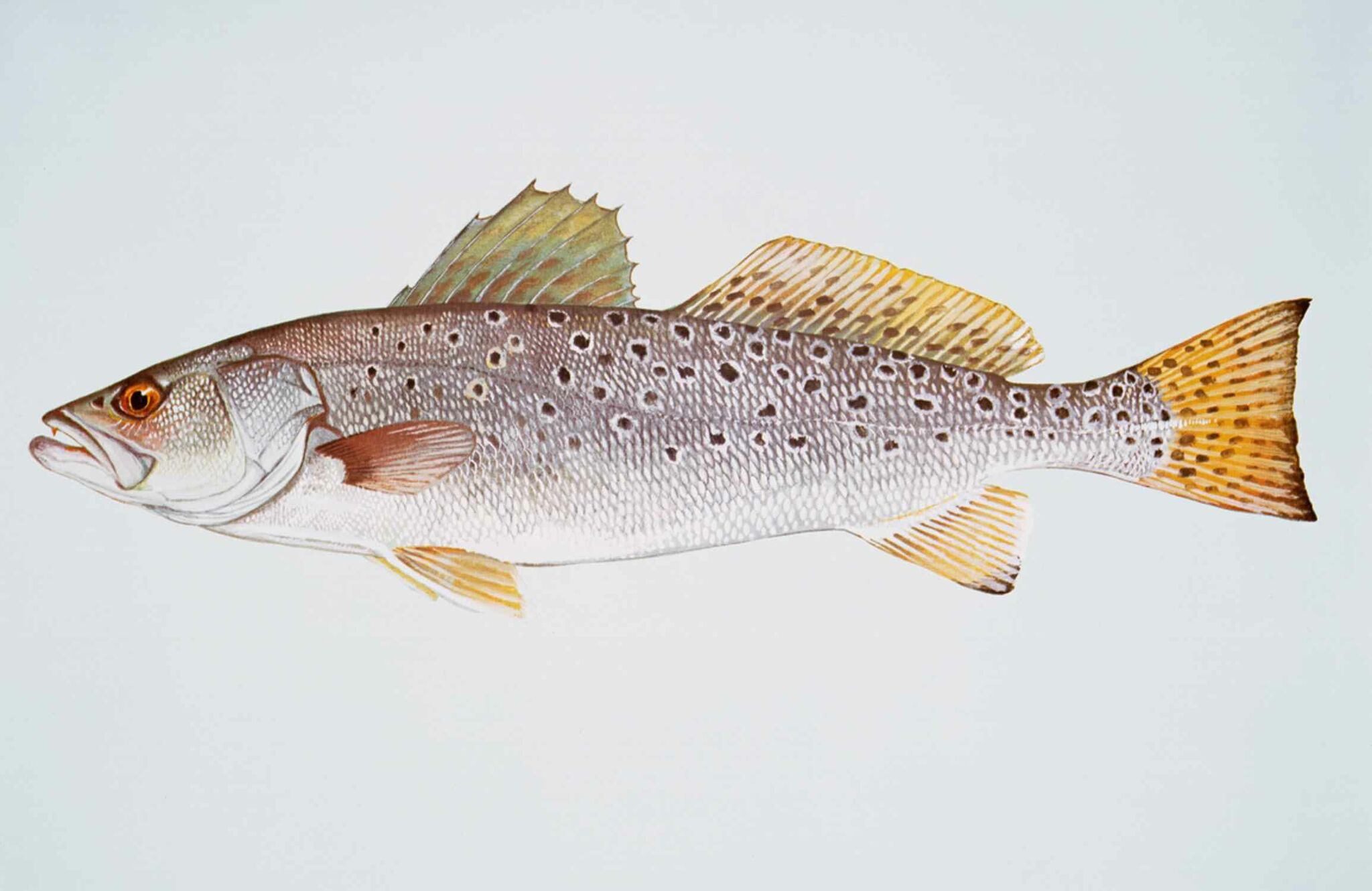
All three fish share the name "trout," but only two are actually trout. Speckled Trout is a drum, in the same family as Red Drum and Black Drum. Rainbow Trout and Brown Trout are Salmonids. Its spotted coloration resembles a brown trout, but it belongs to Sciaenidae, not Salmonidae.11,12 DNA barcoding ignores names and looks at ancestry directly.
Rainbow and Brown Trout look different from each other; how do we know they really belong together?
DNA sequences are essentially a base-4 code. They strings of four letters (A, T, C, G) that are completely blind to morphology. When we build a tree, we are literally comparing those strings to find chunks that match or differ. Rainbow and Brown Trout share very similar stretches of code, which is what groups them together. Sometimes your eyes can convince you two fish are related because they look alike, but the sequence doesn't care about color, spots, or body shape.
Fisheries Management
Catch limits and closures are set at the species level, so getting species boundaries is really important. Phylogenetic data can reveal cryptic species: populations that look identical but are genetically isolated and respond differently to fishing pressure. A quota set for what looks like one population could wipe out a smaller isolated group while leaving a larger one intact.
A quota is set for Atlantic Croaker in Galveston Bay. DNA barcoding later shows the bay and offshore populations are genetically distinct. What's the problem?
The quota assumed one interbreeding population. If they're isolated, they may have different sizes and resilience. The offshore population might handle the pressure fine while the bay population collapses and offshore fish won't replenish it. Each population needs its own quota.